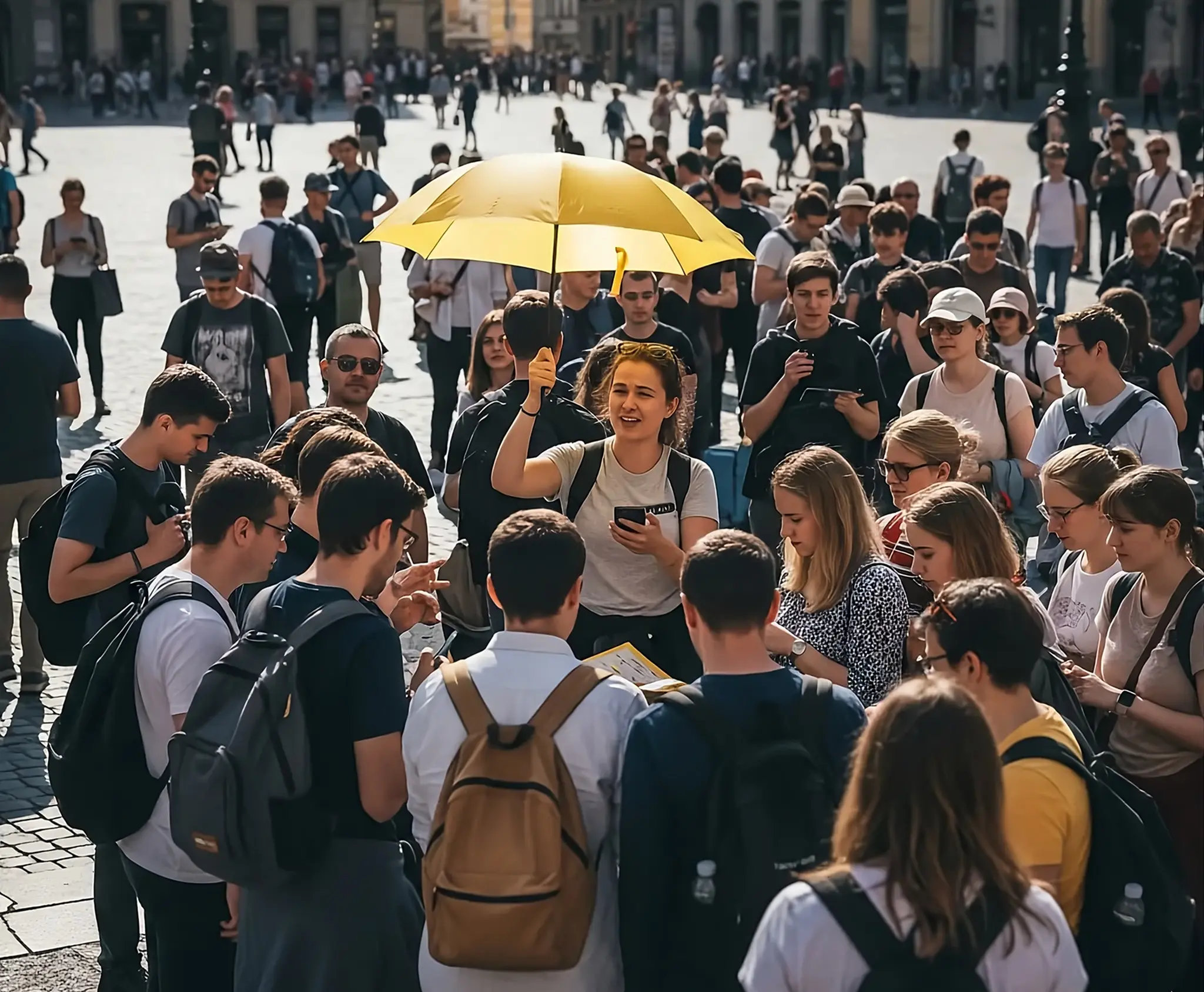
How to Run a Free Tour Company in 2026
If you think free tours really are free, then you have never been a free tour guide.
“Free” is the headline. The business is not. In 2026, running a free tour company means paying for attention, paying for distribution, and paying for reliability — long before you ever see a tip. If you don’t model those costs, the “free tour game” becomes a quiet net negative: you work harder, you take more risk, and you keep less.
Terminology: PAX = passenger headcount (number of people/guests).
The Great Myth: “Free” Means Zero Cost
A free tour is only free for the traveler. For the operator, it’s a performance business with a marketing bill attached. The moment you scale beyond one charismatic guide and a clipboard, you enter the world of paid demand and paid platforms.
Google Doesn’t Charge You… Until It Does
In 2016, you could rank with a decent website and a couple of blog posts. In 2026, Google is a marketplace, not a library. Even if you “don’t run ads,” you still pay:
- With cash — because once competition heats up, the top clicks are often bought.
- With time — content, technical SEO, local listings, and reviews are a weekly job, not a one-time project.
- With opportunity — if you don’t show up, platforms do. They take the lead you could have owned.
The painful part isn’t that Google charges. The painful part is that the cost is invisible — it bleeds through your team’s time, your conversion rates, and your reliance on whoever already has the traffic.
Tour Platforms Charge… Every Single Booking
Let’s say it plainly: platforms are not partners. They are toll roads. They control demand, they control ranking, and they charge for access — directly or indirectly.
- Reservation/processing fees — paid by the traveler, paid by you, or “baked in” somewhere.
- Commission logic — even when a tour is “free,” platforms monetize the ecosystem.
- Ranking pressure — you don’t just deliver a tour; you deliver a review machine.
- Cancellation/no-show risk — you carry the operational cost of unpredictability.
- Dependence — one algorithm tweak and your “business” turns into a stressful hobby overnight.
Why “Truly Free” Is a Net Negative
If you are genuinely trying to keep it “free” — meaning no upsells, no paid add-ons, no retention, no direct channel — then the math is brutal:
- Your costs are fixed: guide payroll splits, training, insurance, permits, admin, customer support.
- Your income is variable: tips swing by season, language, guide style, group composition, and luck.
- Your demand is rented: Google and platforms don’t owe you stability.
So if you run “free” as a philosophy instead of a funnel, you end up donating labor to the platform ecosystem. You take on all the work. They keep the distribution.
The 2026 Playbook: Treat Free Tours as the Front Door
The operators who survive in 2026 don’t win because they have the cheapest product. They win because they have the best system.
1) Know Your Unit Economics (Before You Add Volume)
You don’t need a spreadsheet empire. You need one number: profit per tour. Model:
- Expected tips per PAX × attendance
- Minus guide share (and bonuses if you use them)
- Minus platform/marketing overhead (even if it’s “just time”)
- Minus operational drag (support, refunds, no-show handling, coordination)
2) Stop Selling “Free.” Start Selling Trust.
Travelers don’t book a free tour because it’s free. They book because they’re anxious and want a safe choice. Your marketing should sell certainty: clarity, meeting point confidence, guide quality, group management, and “what happens if I’m late?”
3) Build Direct Demand (So You’re Not One Update Away From Panic)
- Website bookings that don’t require a platform middleman
- Email/SMS follow-up for late bookers and repeat travelers
- Google Business Profile that converts without ads
- Referral loops: hotels, hostels, and partner guides
4) Monetize Ethically (Without Ruining the Free Tour Spirit)
“Free” can still be honest. You just need a business model that respects the traveler and respects the guide:
- Paid upgrades: small-group option, sunset edition, inside visits
- Paid follow-ons: food tour, day trip, museum add-on
- Merch / local partner perks: optional, transparent, never pushy
- Tip framing: educate early, never guilt at the end
5) Make Operations Boring (That’s Where Profit Lives)
If your day is chaos, your margin is chaos. The best operators don’t “work harder.” They reduce failures: fewer missed messages, fewer assignment mistakes, fewer surprise overbookings, fewer no-show shocks.
Free tours aren’t dying. “Unmanaged free tours” are dying.
If you want to run a free tour company in 2026, treat free as the front door — then build a
system that captures trust, builds direct demand, and keeps operations tight enough that tips
turn into profit instead of stress.